In the annals of medical history, few figures cast as long a shadow as Sir William Osler (1849–1919). Often called the "father of modern medicine," Osler did not discover a groundbreaking drug or invent a surgical technique. Instead, he transformed how medicine is taught, practiced, and understood — and his principles remain as relevant today as they were when he walked the wards of Johns Hopkins Hospital more than a century ago.
The Physician Who Moved Medicine to the Bedside
Before Osler, medical education in North America was largely a didactic affair. Students sat in lecture halls, absorbing theory from textbooks and professors who themselves rarely examined patients in front of their trainees. Osler upended this model when he joined Johns Hopkins in 1889, insisting that medical students learn by doing — at the patient's bedside, not in the amphitheater.
"He who studies medicine without books sails an uncharted sea," Osler famously wrote, "but he who studies medicine without patients does not go to sea at all." This was not mere rhetoric. Osler built a residency system that placed young physicians in direct, sustained contact with patients. He required students to take histories, perform physical examinations, and correlate their findings with pathological observations. The model he established at Hopkins became the template for medical education across the English-speaking world and remains, in its essential form, the standard today.
Systematic Observation as the Foundation of Evidence
Osler was, above all, an empiricist. He believed that careful observation — of the patient, of the disease process, of the response to treatment — was the highest form of clinical reasoning. In an era when much of medicine was still governed by tradition and anecdote, Osler championed a systematic approach to clinical knowledge.
His magnum opus, The Principles and Practice of Medicine (1892), was revolutionary not for its original discoveries but for its insistence on grounding clinical practice in observed evidence. The text organized diseases by organ system, described their clinical presentations with extraordinary precision, and acknowledged honestly when effective treatments did not exist. It became the most widely used medical textbook in the world for decades and directly inspired the founding of the Rockefeller Institute for Medical Research — a testament to how systematic clinical observation can catalyze scientific progress.
This commitment to evidence over dogma anticipated the evidence-based medicine movement by nearly a century. When Archie Cochrane, David Sackett, and their colleagues formalized EBM in the 1990s, they were building on intellectual foundations that Osler had laid. The insistence on rigorous observation, honest acknowledgment of uncertainty, and integration of the best available evidence into clinical decisions — these are Oslerian values expressed in modern language.
The Humanistic Imperative
Perhaps the most enduring dimension of Osler's legacy is his insistence that medicine is fundamentally a human endeavor. He saw the patient not as a case or a diagnosis but as a person embedded in a life story. "The good physician treats the disease," he wrote. "The great physician treats the patient who has the disease."
Osler practiced what he preached. He was known for spending long hours at the bedside, listening to patients, and teaching students to do the same. He emphasized the importance of understanding a patient's fears, their social circumstances, and their individual response to illness. He believed that the clinical encounter was, at its best, a relationship built on trust, compassion, and mutual respect.
This humanistic vision stands in instructive tension with the direction of modern healthcare. As health systems grow larger, as electronic health records multiply documentation burdens, and as algorithmic decision support tools become more prevalent, the risk of reducing patients to data points grows ever more acute. Osler's legacy is a corrective to this tendency — a reminder that clinical excellence requires not just technical competence but emotional intelligence and moral imagination.
Osler in the Age of AI and Informatics
It would be tempting to view Osler as a relic of a simpler era, irrelevant to the complexities of 21st-century medicine. Nothing could be further from the truth. The challenges that Osler identified — the gap between knowledge and practice, the tendency toward dogma, the dehumanization of the clinical encounter — are, if anything, more pressing today.
Consider the current enthusiasm for artificial intelligence in healthcare. AI systems can process vast amounts of clinical data, identify patterns invisible to the human eye, and generate predictions with impressive accuracy. But they cannot listen to a patient's story. They cannot sense the fear behind a clinical question. They cannot exercise the moral judgment required when evidence is ambiguous and values are in conflict.
At Acumenus Data Sciences, we build clinical intelligence platforms precisely because we believe in the Oslerian synthesis — that the best care arises when rigorous data science serves the clinical relationship, not replaces it. Our platforms are designed to surface evidence, illuminate patterns, and support decisions, so that clinicians can spend more time doing what Osler knew mattered most: being present with their patients.
Lessons for the Modern Practitioner
What can today's clinicians, informaticists, and health system leaders learn from Osler? Several principles emerge:
- Ground decisions in observation, not assumption. Whether you are designing a clinical pathway, building a predictive model, or evaluating a new technology, start with what the data actually show — not what you expect them to show.
- Acknowledge uncertainty honestly. Osler was never afraid to say "I don't know." In an era of information overload, intellectual humility is more valuable than ever.
- Invest in education and mentorship. Osler's greatest innovation was not a discovery but a teaching method. The development of the next generation of clinician-informaticists requires the same commitment to hands-on, experiential learning.
- Never lose sight of the patient. Every data warehouse, every analytics dashboard, every machine learning model exists for one purpose: to improve the care of individual human beings. The moment we forget that, we have lost the thread.
A Legacy That Endures
More than a hundred years after his death, Osler's influence permeates every corner of medicine. The residency system, the emphasis on bedside teaching, the integration of pathology and clinical medicine, the insistence on lifelong learning — all of these bear his imprint. But perhaps his most lasting contribution is the simplest: the conviction that medicine, at its highest expression, is both a science and an art, and that neither can flourish without the other.
As we build the next generation of clinical intelligence tools, as we deploy AI and machine learning in service of patient care, as we wrestle with the complexities of data standardization and interoperability, we would do well to keep Osler's voice in our ears. The technology will evolve. The diseases will change. But the fundamental challenge of medicine — to bring knowledge, compassion, and wisdom to the care of each individual patient — will remain. And in that challenge, Osler is still our best teacher.
Dr. Udoshi is Medical Director of Informatics at Acumenus Data Sciences and has over 20 years of experience spanning clinical medicine, health information technology, and AI innovation.
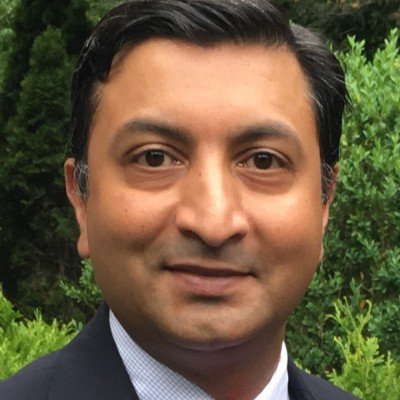 Sanjay M. Udoshi MD
|
Sanjay M. Udoshi MD
|